Vision: Data sciences has emerged as a critical technology for all basic and translational research endeavours. The abundance of natural wealth, bio-diversity, geo-diversity can be put to great use for the development of the North East region in particular and nation in general by adopting contemporary scientific and technological advances. CSIR-NEIST undertakes the path of documentation, digitization, deposition of data and analyse this data with Machine Learning and Artificial Intelligence applications, with outcomes leading to societal benefit.
MANDATE The division’s mandate is to conduct fundamental and applied research in Computational Modelling and Data Science Spanning. The division is expected to facilitate various R&D Divisions viz. Geosciences, Chemical Sciences, Materials Sciences, Biological Sciences and Engineering Sciences to perform big data analysis by adopting contemporary scientific and technological advances. Also it will undertake the path of documentation, digitization, deposition of data and subject this data for Machine Learning and Artificial Intelligence applications.
OBJECTIVE:

Education : Ph. D in Computer Science and Engineering
Employee ID: EMP1298
Email: hridoy@neist.res.in, hridoy69@gmail.com
Area of Interest: Arificial Intelligence, Machine Learning, Software Development, Database Development
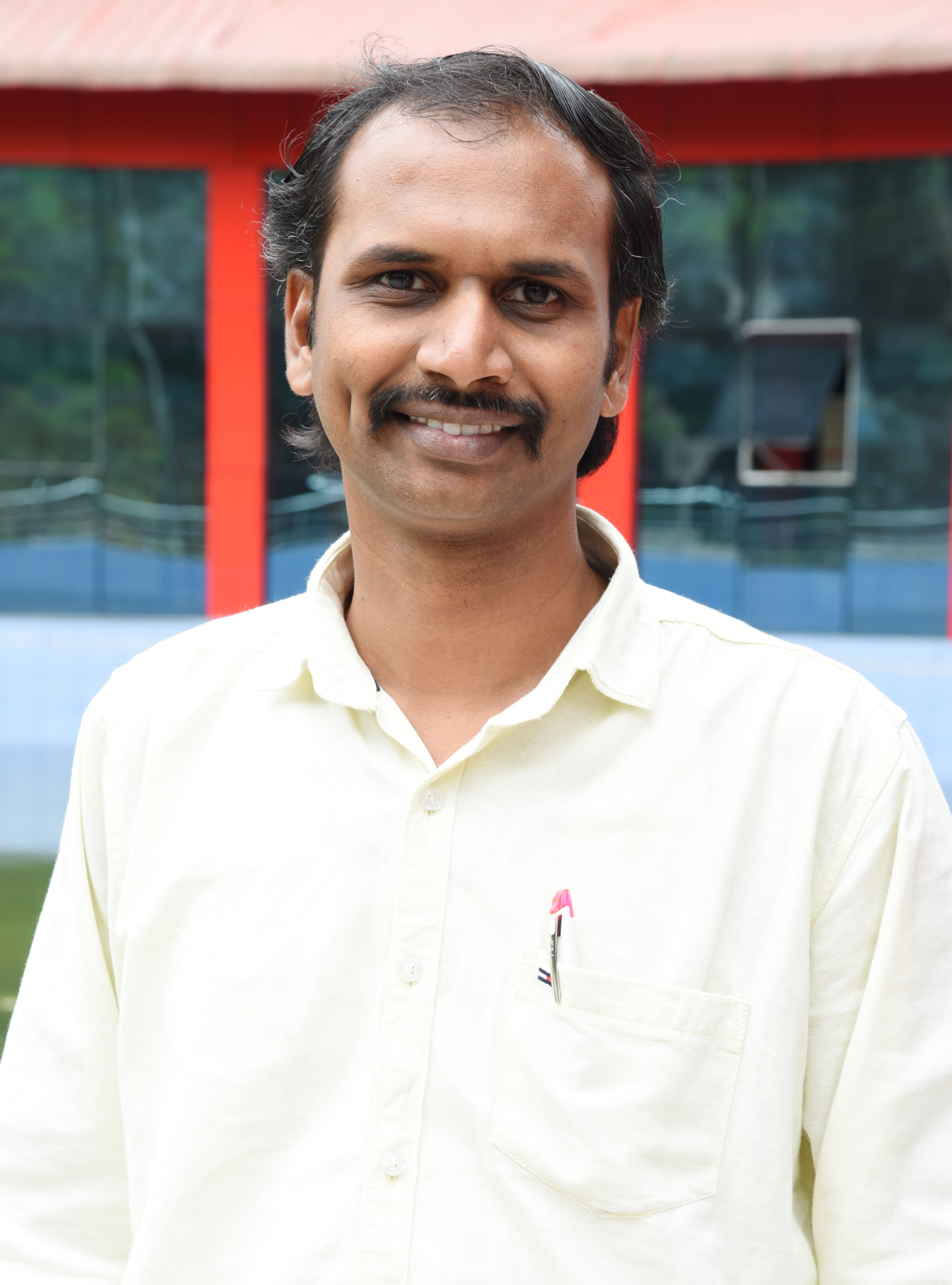
Education : Ph. D
Employee ID: EMP1293
Email: nagamani@neist.res.in
Area of Interest: Software Development, Machine Learning, Network Pharmacology

Education : Ph. D in Computer Science and Engineering
Employee ID: EMP1298
Email: hridoy@neist.res.in, hridoy69@gmail.com
Area of Interest: Arificial Intelligence, Machine Learning, Software Development, Database Development
Education : PhD (Botany),Scientist (Adjuct)
Employee ID: EMP1297
Email: pbharali@neist.res.in, pankajbharali98@gmail.com
Area of Interest: Plant pathogen interaction, genomic-based pathogenicity, plant systematics, alpine biodiversity, medicinal and aromatic plants, conservation biology, traditional knowledge-based drug discovery, ethnobiology

Education :B. Tech in Computer Science and Engineering
Employee ID: EMP1349
Email: bikram@neist.res.inn
Areas of interest: Website Development, Sotware Development, Artificial Inteligence, Machine Learning
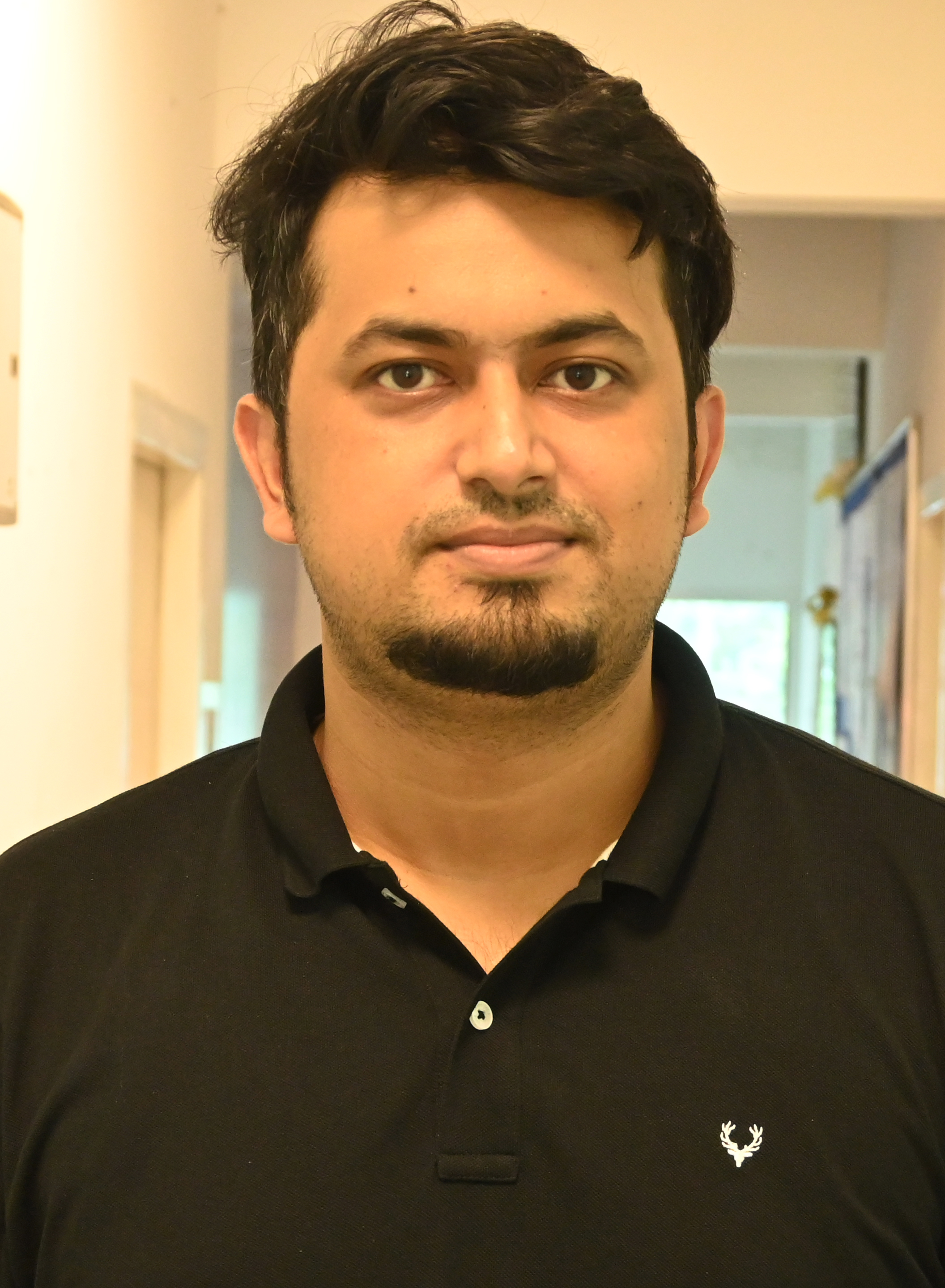
Education : M. Tech in Computer Science and Engineering
Employee ID: EMP1350
Email: debasish@neist.res.in
Areas of interest: Brain-computer Interface, Machine Learning, Internet-of-Things, Software Development
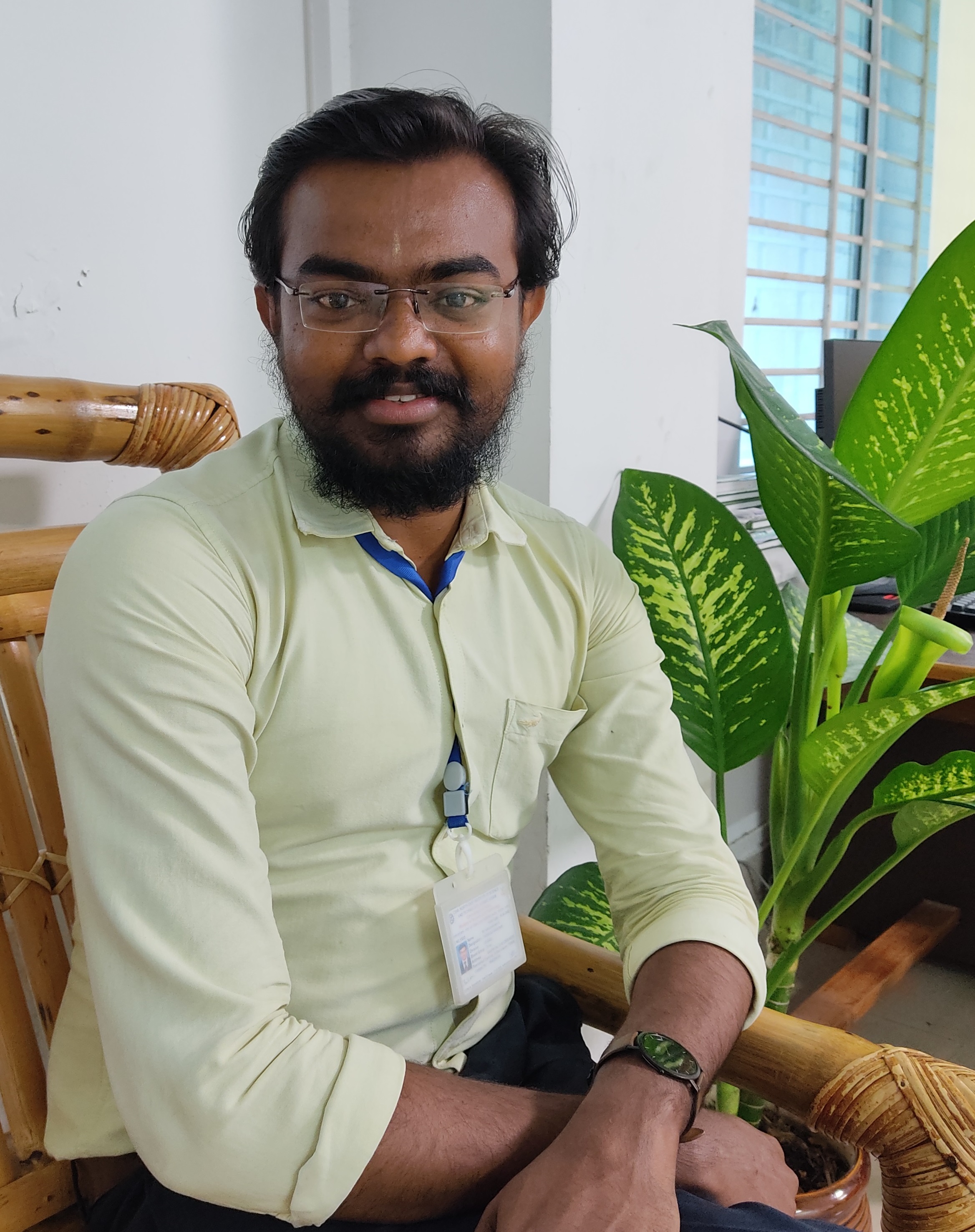
Education : Diploma in Information Technology
Employee ID: EMP1332
Email: vaikundamani@neist.res.in
Areas of interest: IT Administration, Computer Hardwares and Network Security, Website Development

Education : Ph. D, Tezpur University, Tezpur, Assam
Email: hima91sarma@gmail.com
Area of Interest: Development of galaxy based Cancer Specific Web portal (MPDS-Cancer) using Machine Learning, Computational Biology and Bioinformatics
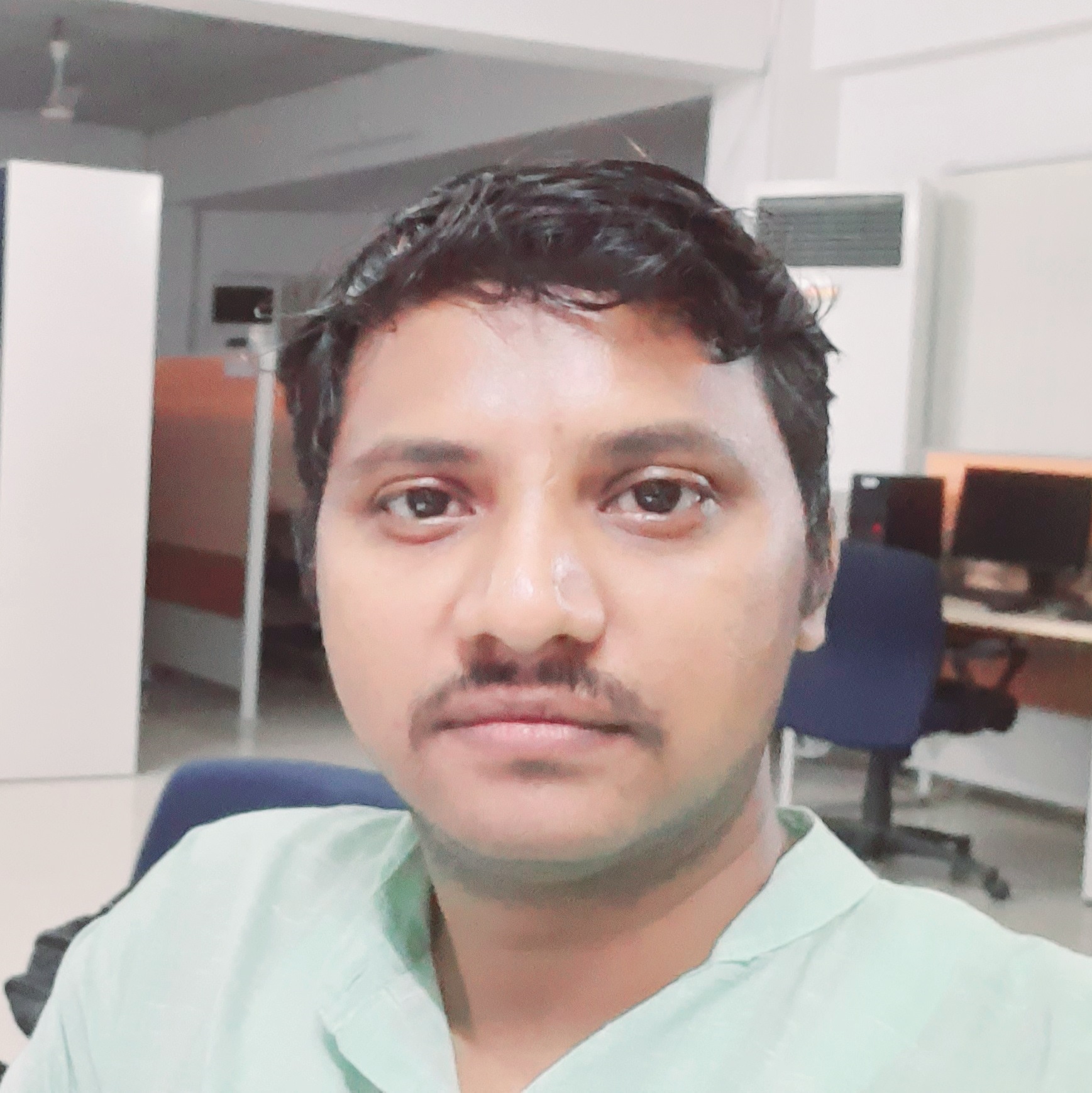
Education : Ph. D in Applied Physics, Babasaheb Bhimrao Ambedkar University, Lucknow, Uttar Pradesh
Email: akbbau@yahoo.com
Area of Interest: Computational Chemistry, Molecular Modeling, Non-Covalent Interactions, Computer-Aided Drug Design, Development of Disease Specific Web Portals (MPDS) based on Galaxy Platform, Compound Library, IoT, Artificial Inteligence and Machine Learning

Education : Ph. D in Physics, Assam University, Silchar, Assam
Email: deb.jyotirmoy11@gmail.com
Area of Interest: Electronic Structure Calculations, Designing of Novel Materials for Optoelectronics, Energy Storage and Gas Sensing Applications

Education : Ph. D in Bioinformatics
Email: prajishasujaya@gmail.com
Area of Interest: Drug Design, Molecular Dynamics, Pharmacophore Mapping and Molecular Docking

Education :Ph. D, BR Ambedkar University, Luckhnow, Uttar Pradesh
Email: apdapbbau@gmail.com
Area of Interest: Computational Chemistry, Noncovalent Interactions Current Position: Post Doctoral Fellow, Hebrew University of Jerusalem, Isreal.

Education : Ph. D in Computational Biology, CSIR-IICT, Hyderabad, Telangana
Email: mr.kumarnandan@gmail.com
Area of Interest: Protein and Membrane Modeling, Non-Covelant Interactions and Drug Design
Current Position: Post Doctoral Fellow, Kansas State University, USA

Education : Ph. D in Biological Sciences
Email: lijo89john@gmail.com
Area of Interest: Chemoinformatics, Machine learning, Computer Aided Drug Design, Molecular Property Diagnostic Suite (MPDS) - Software Development
Current Position: Dr. Reddy's Lab, Hyderabad

Education : Ph. D in Computational Biology
Email: essjmr@gmail.com
Area of Interest: Computer Aided Drug Designing, Network Pharmacology, Database Development, Web Portal Design, Molecular Biology
Current Position: Schrodinger Inc. Hyderabad

Education : M.Sc. in Bioinformatics
Email: lipsa.bim@gmail.com, lipsa.neist22j@acsir.res.in
Area of Interest: Computational and Structural Biology, Data Science (Artificial Intelligence, Machine Learning), Database Development, and Web Portal Design

Education : M.Sc. in Chemistry
Email: k.drysti@gmail.com
Area of Interest: Computational chemistry and Materials Modelling, Designing of Advanced Materials for High-end Applications, Properties Exploration of Nanoscale Materials

Education : M.Sc. in Bioinformatics
Email: dipshikhagogoi67@gmail.com
Area of Interest: Computer-Aided Drug Designing, Structural Biology, Molecular Modeling, Molecular Dynamics Simulation, Biological Network Analysis and Database Development

Education : M.Sc. in Biotechnology (Assam University, Silchar, Assam)
Email: Pandeyabhishek655@gmail.com
Area of Interest: Computer-Aided Drug Discovery, Molecular Biology of Host-Pathogen Interaction and Diseases

Education : Ph. D in Computational Chemistry(Thesis Submitted)
Email: bhargavkumar1804@gmail.com
Area of Interest: Computational Chemistry, Cheminformatics and Data Driven Approaches
Current Position: Senior Project Associate, CSIR-IICT, Hyderabad

Education : Ph. D in Computational Biology(Thesis Submitted)
Email:kikrutant@gmail.com, kikrusenuo.neist19a@acsir.res.in
Area of Interest: Database development, Ethnopharmacology, Protein-Protein Interaction, Molecular Modelling, Natural Products
Education : Ph. D in Computational Biology
Email: essjmr@gmail.com
Area of Interest: Computer Aided Drug Designing, Network Pharmacology, Database Development, Web Portal Design, Molecular Biology
Current Position: Schrodinger Inc. Hyderabad
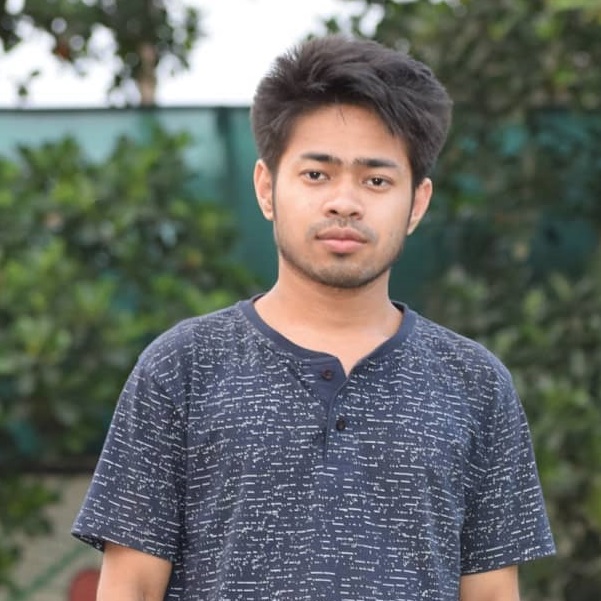
Education :B. Tech in Computer Science and Engineering
Email: hillulchutia@gmail.com
Area of Interest: App Development and Machine Learning

Education :M. Tech in Information Security (NIT Allahabad)
Email: bitu.mazumdar@gmail.com
Area of Interest: Machine learning, Web Application Development

Education : M.Sc. in Biotechnology and Bioinformatics
Email: debapornajrt@gmail.com
Area of Interest: Biological Database Management System, Microbiology and Biotechnology

Education :M.Sc. in Chemistry
Email: krishnandudey2017@gmail.com
Area of Interest: Computational nanomaterials defects and catalysis
Molecular Property Diagnostic Suite (MPDS):
The Molecular
Property
Diagnostic Suite (MPDS) (http://mpds.neist.res.in) is a galaxy based open-source
indigenous drug discovery and development platform. The idea was conceived in 2004
and the first MPDS platform was launched in 2017. The MPDS platform has been
initially developed for the Tuberculosis (MPDSTB) and its robustness allows us to
extend to further diseases such as diabetes, metabolic disorders and HIV. All these
platforms have four different modules viz. data library, data processing, data
analysis and advanced modules. The data library contains all the information about
specific diseases including drug targets, literature, approved drugs etc. Data
processing module is dedicated to the Chemoinformatics (i.e. 2D, 3D descriptors
calculation) analysis. The computational drug discovery modules such as molecular
docking, 2D-QSAR are available in the data analysis module. One of the important
components of MPDS is compound library and it contains ~130 million compounds along
with its properties. The compound library developed with the intention to address
the question why the molecule behaves the way it behaves. Once the properties of the
molecules have understood, a new molecule can be predicted or synthesized with the
desired properties. The MPDS compound library contains a diverse set of molecules
that includes drug molecules, metabolites, catalysts etc. The group has developed
different models (i.e. antiviral prediction, M.tb. permeability prediction, success
and failures of clinical trials) by combining chemoinformatics and machine learning
approaches. MPDS portals are available at the following link Go to MPDS
ACDS Lecture Series :
The ACDS (Advanced Computation and Data Science) lecture series is an initiative of
the division towards imparting high quality lectures in the field of advanced
computation and data sciences. The ACDS lectures aims to impart knowledge on
transforming theory into practice. As such, the lecture series not only contains
subject matter but also consists of worked out examples and exercises. To enhance
the effectiveness of the lecture series, the entire syllabus has been categorized
into three modules: a) Background b) Introduction c) Core and d) Technical. The
lecture series has been designed in four modules comprising of study materials, 400
worked examples and 2000 exercise questions. The main aim of ACDS lecture series is
generate trained manpower who can actively work on the fourth paradigm of scientific
discovery which is the current state-of-the art for any research.
Ongoing Projects:
The proposed centre of excellence in bioinformatics at CSIR-NEIST is aimed to integrate molecular modelling, bioinformatics, chemoinformatics, system biology and data science approaches to provide solution in various areas. Connection of traditional, bioinformatics, mathematical and statistical approaches to those of AI, ML and DL will be the key strategy for solving many societal problems in near future.
Exploiting the size-, shape-, and composition dependent optoelectronic properties of nanostructured materials to design computationally the latest generation photovoltaic devices with higher efficiency. Static energy calculations are performed using SCC-DFTB method and electron transport dynamics are investigated using NEGF formalism. Development of SCC-DFTB parameters for necessary elements using automatic DFTB parameter toolkit (ADPT) based on particle swarm optimization (PSO) algorithm.
Exploration of photocatalytic properties of composite nanomaterials, composed with inorganic-organic nanohybrids, semiconductor heterostructures and 2D nanomaterials, as a function of size, shape and composition of materials for CO2 reduction and fuel production.
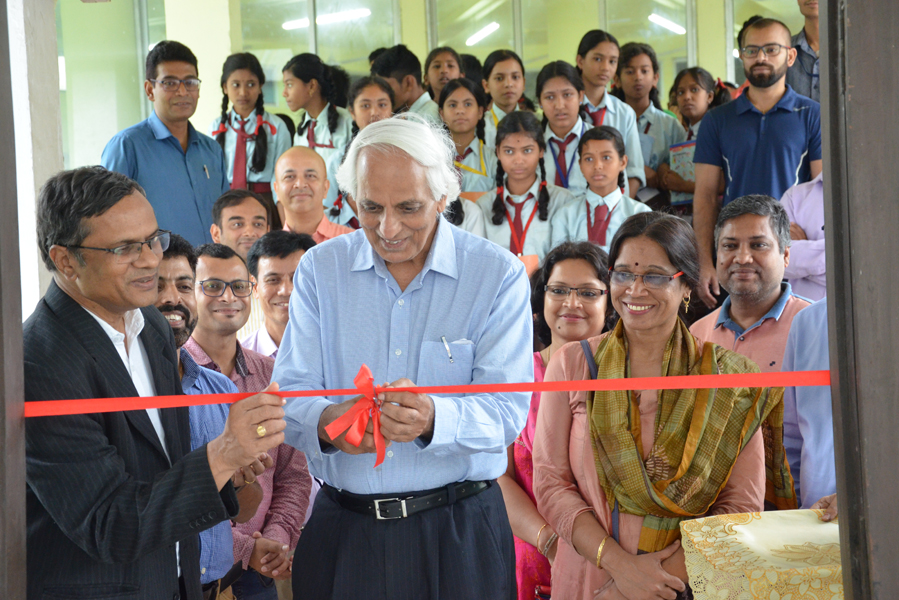
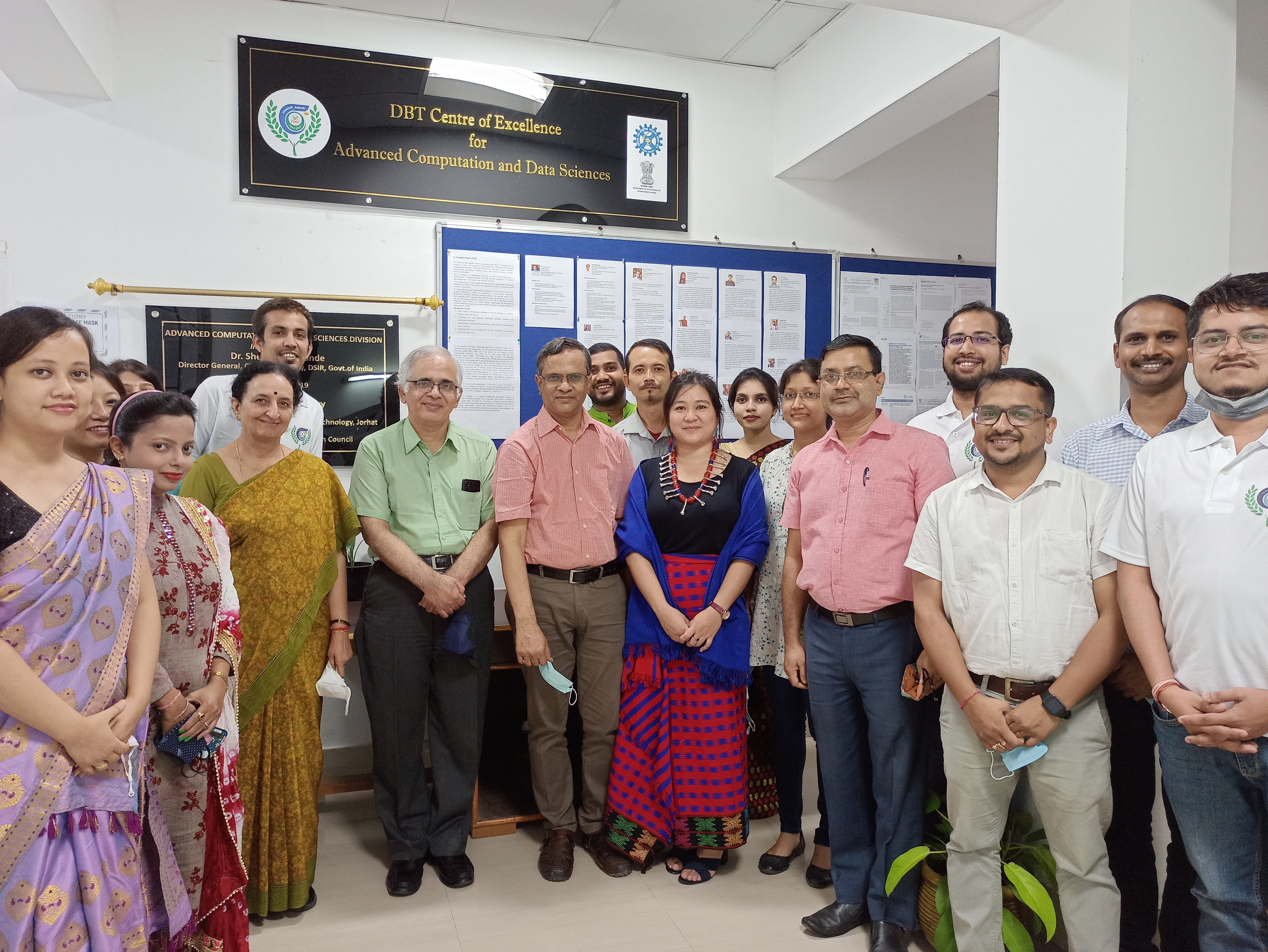
Establishment of Center of excellence in Advanced Computation and Data Sciences, BIC at CSIR-NEIST
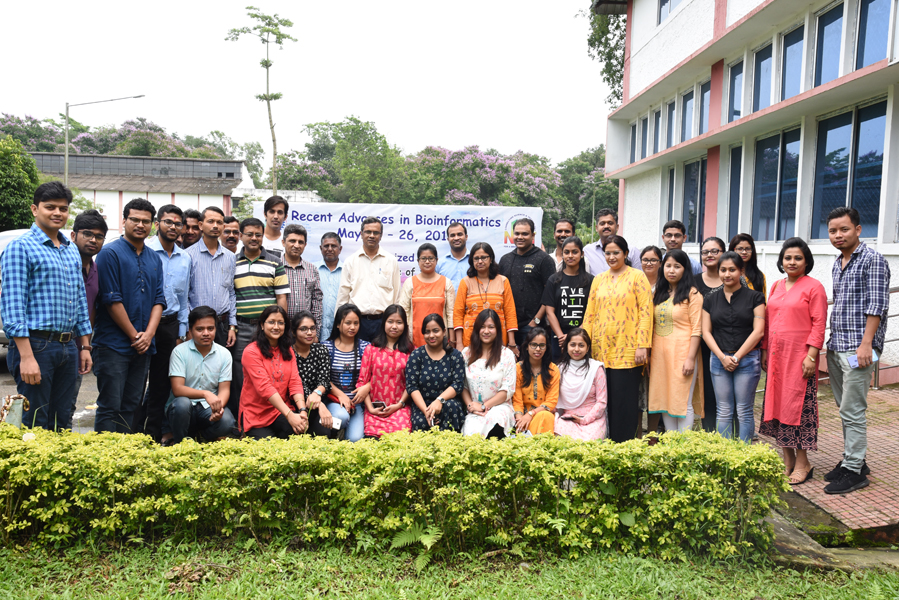
Events organized:
2022:
2021
2020
2019
The ACDS division is currently equipped with 170 TF of computational facilities as mentioned below.
PCs
| Configuration | Quantity | Performance (in Tera Flops) |
|---|---|---|
| Intel i7-10700/16 GB/ 3.8 GHz | 14 | 3.36 TF |
| Intel i7-10700/16 GB/ 3.2 GHz | 1 | 0.24 TF |
| Intel i7 /32 GB/ 3.00 GHz | 19 | 2.85 TF |
| Intel i7-9700/8 GB/ 3.00 GHz | 5 | 0.45 |
PCs
| Configuration | Quantity | Performance (in Tera Flops) |
|---|---|---|
| Intel i7-10700/16 GB/ 3.8 GHz | 14 | 3.36 TF |
| Intel i7-10700/16 GB/ 3.2 GHz | 1 | 0.24 TF |
| Intel i7 /32 GB/ 3.00 GHz | 19 | 2.85 TF |
| Intel i7-9700/8 GB/ 3.00 GHz | 5 | 0.45 |
Explore moments and highlights from various events, activities, and milestones at CSIR-NEIST through our gallery.